Indian Banks Eye ₹4,000 Crore Savings as RBI Support Boosts NRI Deposits

Source: Economictimes
Arth Insight · What this means for your wallet
- Banks might avoid increasing interest rates on your home, car, or personal loans due to cheaper funds.
- If you have an NRI friend or family member, they might get better interest rates on their foreign currency deposits in India.
- The overall banking system becomes more stable, which is good for the economy and your money in the long run.
Indian banks are expected to save nearly ₹4,000 crore in costs by tapping into foreign currency deposits from NRIs. This move, supported by the RBI, provides a cheaper alternative to domestic fixed deposits and helps banks tackle their current cash crunch.
- ▸Banks could save ₹4,000 crore annually by using the FCNR(B) window instead of domestic deposits.
- ▸The RBI is covering hedging costs, making foreign currency deposits cheaper for banks.
- ▸Expected inflows of $35-45 billion will help solve the current cash shortage in the banking system.
- ▸Retail borrowers may benefit if banks pass on these lower funding costs through stable lending rates.
- ✓Banks could save ₹4,000 crore annually by using the FCNR(B) window instead of domestic deposits.
- ✓The RBI is covering hedging costs, making foreign currency deposits cheaper for banks.
- ✓Expected inflows of $35-45 billion will help solve the current cash shortage in the banking system.
- ✓Retail borrowers may benefit if banks pass on these lower funding costs through stable lending rates.
A Cheaper Alternative to Domestic Deposits
Indian banks are looking at a massive windfall as they shift their focus toward Foreign Currency Non-Resident (Bank), or FCNR(B), deposits. By raising funds through these accounts, the banking sector is estimated to save approximately ₹4,000 crore annually. This financial relief comes at a critical time when banks are struggling to attract domestic deposits despite high interest rates.
The RBI Advantage
The primary reason for these significant savings is the support provided by the Reserve Bank of India (RBI). Typically, when banks take foreign currency deposits, they have to pay high 'hedging' costs to protect themselves against fluctuations in the value of the Rupee. However, under the current window, the RBI is covering these hedging costs. This makes FCNR(B) deposits substantially cheaper for banks compared to local fixed deposits (FDs).
Liquidity Relief on the Horizon
Industry experts anticipate that this move could trigger foreign currency inflows ranging between $35 billion and $45 billion. This massive influx of capital is expected to provide a much-needed 'liquidity' cushion. Currently, many Indian banks are facing a gap where they are lending money faster than they are collecting deposits. These foreign funds will help bridge that gap, ensuring banks have enough cash to continue lending to businesses and individuals.
What This Means for the Common Man
For the average Indian retail reader, these developments could lead to two main outcomes:
- Better NRI Rates: Banks are likely to offer more competitive interest rates on FCNR(B) accounts to attract overseas Indians.
- Potential Loan Relief: As banks gain access to cheaper funds, they may eventually be in a position to lower lending rates or at least avoid further hikes in home and car loan interest rates.
By leveraging foreign capital with the central bank's backing, the Indian banking system is finding a way to grow without passing the entire burden of high interest costs onto domestic consumers.
This report is for informational purposes only and does not constitute financial or investment advice; banking policies and interest rates are subject to market risks and regulatory changes.
Interest rates, fees and eligibility for banking products are set by the respective banks and change frequently — verify the current terms with the provider before applying. Some listings may be sponsored. Not financial advice.
Join the Arth Vani channels
Daily news summaries, IPO & market alerts on Telegram and WhatsApp.
Because you read about Banking
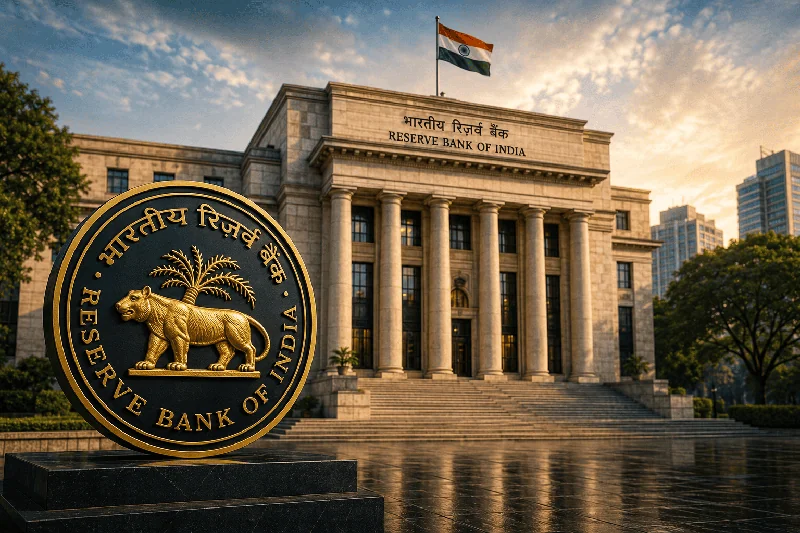
Understanding Why RBI Adjusts Liquidity in the Indian Banking System
The Reserve Bank of India (RBI) periodically withdraws excess cash from commercial banks to manage liquidity, control inflation, and maintain financial stability. This action typically involves tools like reverse repo operations or open market sales, aiming to reduce the amount of money available for lending in the economy.
 Breaking
UPI Free for Users, But Merchant Fees Could Reshape Digital Payments
While Unified Payments Interface (UPI) transactions typically remain free for individual users, discussions around potential 'new Merchant Discount Rate' (MDR) policies for businesses could alter payment preferences. This report explains what MDR is and its possible impact on merchant adoption and the future balance between digital and cash payments in India.
 New Launch
Amex Launches Business Savings Account for Higher Yields
American Express has introduced a new high-yield business savings account aimed at helping businesses earn more on their deposits. The account also offers integrated financial management tools.
Related Stories

Understanding Why RBI Adjusts Liquidity in the Indian Banking System
The Reserve Bank of India (RBI) periodically withdraws excess cash from commercial banks to manage liquidity, control inflation, and maintain financial stability. This action typically involves tools like reverse repo operations or open market sales, aiming to reduce the amount of money available for lending in the economy.
 Breaking
UPI Free for Users, But Merchant Fees Could Reshape Digital Payments
While Unified Payments Interface (UPI) transactions typically remain free for individual users, discussions around potential 'new Merchant Discount Rate' (MDR) policies for businesses could alter payment preferences. This report explains what MDR is and its possible impact on merchant adoption and the future balance between digital and cash payments in India.
 New Launch
Amex Launches Business Savings Account for Higher Yields
American Express has introduced a new high-yield business savings account aimed at helping businesses earn more on their deposits. The account also offers integrated financial management tools.

Juspay Eyes Global Expansion as 'Agentic Payments' Set to Transform Indian Digital Finance
Juspay is pivoting toward 'agentic commerce' and global markets after 12 years of scaling India's payment infrastructure. The fintech major aims to export Indian digital payment innovations to developed economies while simplifying complex transaction layers for retail users.