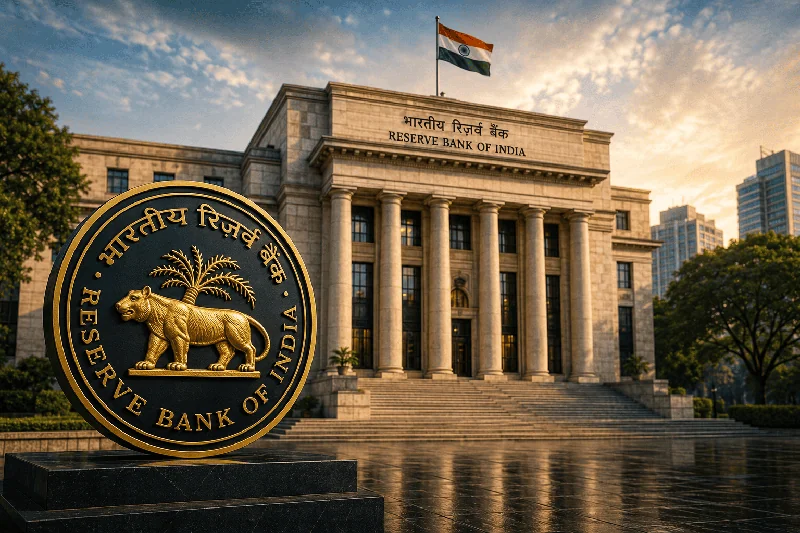
RBI Holds Repo Rate at 6.5% for Sixth Straight Meeting, Stays 'Withdrawal of Accommodation'

Source: Arth Vani
Arth Insight · What this means for your wallet
- The benchmark repo rate remains at 6.5%, reflecting a cautious approach to price stability.
- The MPC is prioritising the alignment of inflation to the 4% target over the medium term.
- India's growth forecast for the fiscal year remains unchanged despite global economic cues.
The Monetary Policy Committee kept the benchmark repo rate unchanged, prioritising the glide path to 4% inflation while retaining its growth forecast for the fiscal year.
- ▸Repo rate steady at 6.5%
- ▸FY GDP growth projection retained at 7%
- ▸CPI inflation seen averaging 4.5%
- ▸Stance unchanged at withdrawal of accommodation
- ✓The benchmark repo rate remains at 6.5%, reflecting a cautious approach to price stability.
- ✓The MPC is prioritising the alignment of inflation to the 4% target over the medium term.
- ✓India's growth forecast for the fiscal year remains unchanged despite global economic cues.
- ✓Retail investment momentum continues with rising SIP inflows and new demat account additions.
- ✓The 'Withdrawal of Accommodation' stance indicates a focus on managing liquidity in the system.
The Monetary Policy Committee kept the benchmark repo rate unchanged, prioritising the glide path to 4% inflation while retaining its growth forecast for the fiscal year.
The development marks a significant shift in how Indian investors and institutions are positioning themselves for the coming quarters. Analysts tracking the sector note that liquidity, policy direction and global cues will remain the dominant themes. Retail participation has continued to deepen, with SIP inflows and demat account additions sustaining their multi-year uptrend.
Market participants will closely watch upcoming data prints, corporate earnings and commentary from regulators. For long-term investors, experts reiterate the importance of asset allocation, diversification and staying invested through volatility rather than attempting to time the market.
Arth Vani will continue to track this story and bring you verified, jargon-free updates as they develop. Readers are reminded that the information here is for educational purposes and not a recommendation to buy or sell any security.
Interest rates, fees and eligibility for banking products are set by the respective banks and change frequently — verify the current terms with the provider before applying. Some listings may be sponsored. Not financial advice.
Frequently Asked Questions
What is the current RBI repo rate following the latest MPC meeting?
The Reserve Bank of India has kept the benchmark repo rate unchanged at 6.5%. This decision was made during the sixth consecutive Monetary Policy Committee meeting to maintain economic stability.
What is the RBI's target inflation rate?
The RBI is prioritising a glide path to achieve a 4% inflation target. The Monetary Policy Committee is balancing this goal while supporting overall economic growth forecasts for the fiscal year.
What does 'Withdrawal of Accommodation' mean in this context?
This policy stance indicates that the RBI is focused on reducing the money supply in the economy to curb inflationary pressures. It suggests that the central bank is not yet ready to shift toward a more stimulative or 'easy' monetary policy.
How does the RBI's decision affect retail investors in India?
Steady interest rates provide a predictable environment for retail investors, who are currently driving record SIP inflows. Experts suggest that investors should focus on asset allocation and diversification rather than trying to time the market during periods of volatility.
Did the RBI change its growth outlook for the Indian economy?
No, the Reserve Bank of India has retained its growth forecast for the current fiscal year. The committee remains optimistic about India's economic trajectory despite tracking global cues and corporate earnings closely.
Join the Arth Vani channels
Daily news summaries, IPO & market alerts on Telegram and WhatsApp.
Because you read about Banking
 Breaking
Indian Banks Report Robust 18.8% Credit Growth in August
Scheduled commercial banks in India recorded a strong 18.8% growth in credit in August, indicating increased lending activity in the financial system. This robust expansion suggests a healthy demand for loans across the economy.
RBI Panel Recommends Higher WMA Limits for States, Cautions on Year-End Borrowing
A Reserve Bank of India (RBI) panel has suggested increasing the Ways and Means Advances (WMA) limit for state governments, which acts as a temporary overdraft facility. The panel also raised concerns regarding states' tendency to increase borrowing towards the end of the financial year.
 Breaking
RBI Drains ₹1.66 Lakh Crore Liquidity to Stabilize Rupee, Influence Rates
The Reserve Bank of India (RBI) has pulled approximately $20 billion (around ₹1.66 lakh crore) from the banking system using foreign exchange operations. This significant action aims to manage excess money supply, support the Indian Rupee, and influence short-term interest rates in the economy.
Related Stories
 Breaking
Indian Banks Report Robust 18.8% Credit Growth in August
Scheduled commercial banks in India recorded a strong 18.8% growth in credit in August, indicating increased lending activity in the financial system. This robust expansion suggests a healthy demand for loans across the economy.

RBI Panel Recommends Higher WMA Limits for States, Cautions on Year-End Borrowing
A Reserve Bank of India (RBI) panel has suggested increasing the Ways and Means Advances (WMA) limit for state governments, which acts as a temporary overdraft facility. The panel also raised concerns regarding states' tendency to increase borrowing towards the end of the financial year.
 Breaking
RBI Drains ₹1.66 Lakh Crore Liquidity to Stabilize Rupee, Influence Rates
The Reserve Bank of India (RBI) has pulled approximately $20 billion (around ₹1.66 lakh crore) from the banking system using foreign exchange operations. This significant action aims to manage excess money supply, support the Indian Rupee, and influence short-term interest rates in the economy.
 Breaking
DCB Bank Aims to Cross 500 Branches This Year, Eyes SME and Affordable Housing Growth
DCB Bank plans to significantly expand its footprint across India, aiming to surpass 500 physical branches by the end of this year. This growth strategy, confirmed by the bank's CFO, is primarily driven by a focus on boosting its small and medium-sized enterprise (SME) and affordable housing loan portfolios.