RBI to Re-Issue Government Securities Via Auction on September 25

Source: GNews Bonds
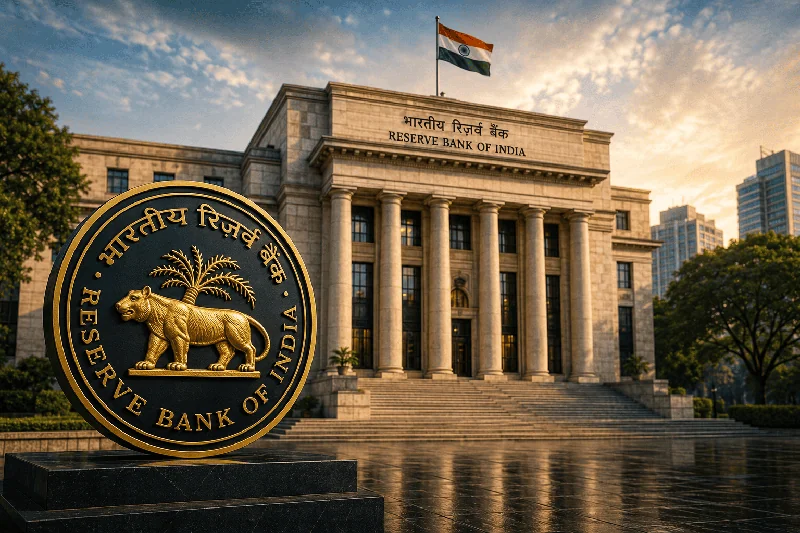
The Reserve Bank of India (RBI) has announced it will conduct a re-issue auction of government securities (G-Secs) on September 25. This move is part of the government's borrowing program to manage its financial needs and maintain liquidity in the bond market.
- ▸RBI will conduct a re-issue auction of government securities on September 25.
- ▸Government securities (G-Secs) are low-risk debt instruments issued by the government.
- ▸Retail investors can access G-Secs via gilt mutual funds or the RBI Retail Direct Scheme.
- ▸These auctions influence broader interest rates and liquidity in the financial market.
- ✓RBI will conduct a re-issue auction of government securities on September 25.
- ✓Government securities (G-Secs) are low-risk debt instruments issued by the government.
- ✓Retail investors can access G-Secs via gilt mutual funds or the RBI Retail Direct Scheme.
- ✓These auctions influence broader interest rates and liquidity in the financial market.
The Reserve Bank of India (RBI), India's central bank, is set to conduct an auction for the re-issue of government securities (G-Secs) on Wednesday, September 25. This action is a routine part of the government's borrowing strategy, aimed at managing its financial requirements and ensuring adequate liquidity within the fixed-income market.
What are Government Securities (G-Secs)?
Government securities are debt instruments issued by the Central Government or State Governments to borrow money. They are essentially promises by the government to pay back the borrowed sum with interest on a specified date. Considered among the safest investment options in India, G-Secs carry minimal credit risk, often referred to as 'risk-free' as they are backed by the full faith and credit of the government. They play a crucial role in the financial system, serving as benchmarks for interest rates across various other debt instruments.
Understanding a 'Re-Issue Auction'
A 're-issue' of government securities means the RBI is offering additional tranches of an already existing security. Instead of launching a brand new bond with a fresh maturity date and coupon rate, the government sells more units of a bond that is already trading in the market. This practice helps in increasing the outstanding amount of a particular security, which in turn enhances its liquidity and makes it more attractive to institutional investors. It also simplifies debt management by reducing the number of different securities in circulation.
The RBI conducts these auctions on behalf of the government to raise funds to bridge the fiscal deficit, finance public infrastructure projects, and meet various other expenditure needs. These auctions are typically held on a weekly basis, adhering to a pre-announced calendar, which provides transparency and predictability to market participants.
How Do G-Sec Auctions Work?
G-Sec auctions are primarily competitive bidding processes open to a wide range of institutional investors. These include commercial banks, primary dealers, insurance companies, mutual funds, provident funds, and other financial institutions. Investors submit bids indicating the amount of security they wish to purchase and the yield (or price) they are willing to accept. The RBI then determines the cut-off yield based on the bids received, and securities are allocated accordingly.
What This Means for Retail Investors
While direct participation in these primary auctions is largely limited to institutional players, retail investors in India can gain exposure to government securities indirectly. The most common ways include:
- Debt Mutual Funds: Many debt funds, particularly 'gilt funds,' primarily invest in government securities. These funds offer diversification and professional management, allowing individual investors to participate in the G-Sec market with relatively small investments.
- RBI Retail Direct Scheme: The RBI also offers a 'Retail Direct Scheme' which allows individual investors to open a 'Retail Direct Gilt Account' directly with the RBI. This enables them to participate in primary auctions of G-Secs and also trade them in the secondary market.
The yields determined in G-Sec auctions are important indicators for the broader fixed-income market. They influence the interest rates on other debt instruments, such as corporate bonds, bank fixed deposits, and even loan rates. A successful auction typically signals healthy demand for government debt and can provide stability to market interest rates.
Specific details regarding the types of government securities to be re-issued, their maturities, and the total issue size for the September 25 auction were not available in the initial announcement. Market participants and investors will await further details from the RBI closer to the auction date to understand the full implications for the bond market.
This article is for informational purposes only and does not constitute financial or investment advice. Investors should consult a qualified financial advisor before making any investment decisions.
Bond / FD returns and credit ratings are indicative and subject to issuer credit risk and interest-rate risk. Verify current terms with the issuer. Some listings may be sponsored. Not investment advice.
Frequently Asked Questions
What are government securities (G-Secs)?
Government securities are debt instruments issued by the Indian government to borrow money. They are considered very safe as they are backed by the government and pay interest to investors.
Why does RBI conduct re-issue auctions for G-Secs?
The RBI conducts these auctions on behalf of the government to raise funds for public expenditure, manage the government's debt, and ensure enough liquidity in the financial system. Re-issuing existing bonds helps consolidate debt and improve market liquidity.
How can retail investors invest in government securities?
Retail investors can invest in G-Secs indirectly through debt mutual funds (especially gilt funds) or directly by opening a 'Retail Direct Gilt Account' with the RBI under its Retail Direct Scheme.
Join the Arth Vani channels
Daily news summaries, IPO & market alerts on Telegram and WhatsApp.
Because you read about Bonds
Emerging Market Local Bonds See Rising Demand as Dollar Debt Loses Appeal
Investors are increasingly turning to local currency bonds in emerging markets. This trend suggests a shift away from traditional dollar-denominated debt. The change in preference highlights evolving global investment strategies.

South Korean Pension Fund Seeks Licence to Invest in Indian Government Bonds
A prominent South Korean pension fund is reportedly seeking regulatory approval to invest in Indian government securities. This development underscores India's growing appeal as a destination for global institutional investors, potentially channeling significant foreign capital into the country's debt markets.

US Fed Rate Decisions: How Indian Debt Mutual Fund Investors Should Position Portfolios
As the US Federal Reserve navigates interest rate adjustments, Indian debt mutual fund investors face a mix of volatility and opportunity. Understanding the correlation between US yields and Indian bond markets is crucial for protecting capital and optimizing returns in fixed-income portfolios.
Related Stories

Emerging Market Local Bonds See Rising Demand as Dollar Debt Loses Appeal
Investors are increasingly turning to local currency bonds in emerging markets. This trend suggests a shift away from traditional dollar-denominated debt. The change in preference highlights evolving global investment strategies.

South Korean Pension Fund Seeks Licence to Invest in Indian Government Bonds
A prominent South Korean pension fund is reportedly seeking regulatory approval to invest in Indian government securities. This development underscores India's growing appeal as a destination for global institutional investors, potentially channeling significant foreign capital into the country's debt markets.

US Fed Rate Decisions: How Indian Debt Mutual Fund Investors Should Position Portfolios
As the US Federal Reserve navigates interest rate adjustments, Indian debt mutual fund investors face a mix of volatility and opportunity. Understanding the correlation between US yields and Indian bond markets is crucial for protecting capital and optimizing returns in fixed-income portfolios.

RBI Drains ₹2.23 Lakh Crore Liquidity via Reverse Repo Auction
The Reserve Bank of India (RBI) successfully absorbed ₹2.23 lakh crore from banks through a variable rate reverse repo auction. This action aims to manage excess liquidity in the banking system.