India's Economy Projected Over 7% Growth in Q1 FY27 on Strong Consumption, Capex

Source: ET Economy
Arth Insight · What this means for your wallet
- Strong economic growth means more job stability and potential for salary increases.
- Increased consumer spending and government projects can boost company profits, potentially increasing your stock/mutual fund returns.
- While growth is strong now, a slight moderation later means you should invest wisely and not expect continuous high returns.
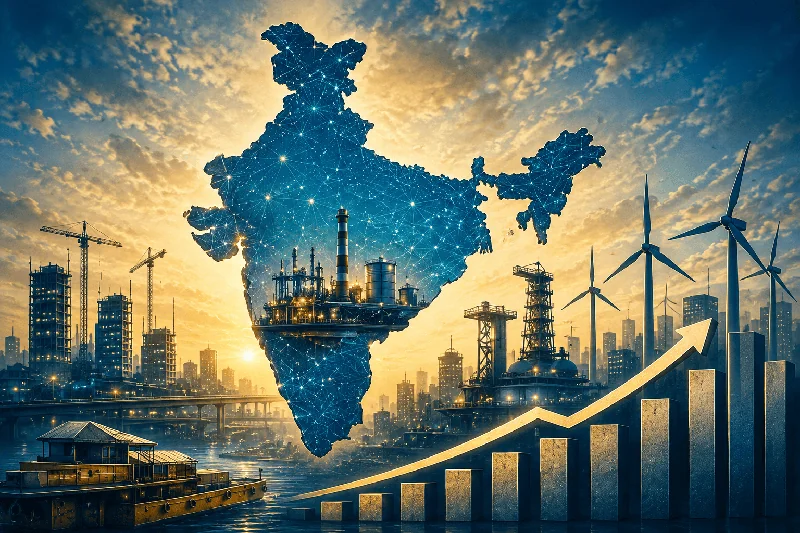
India's economy is anticipated to have grown by more than seven percent in the first quarter of fiscal year 2026-27. This robust expansion was largely driven by resilient domestic consumption, healthy exports, and significant government capital expenditure. While current indicators are strong, economists expect a slight moderation in growth during subsequent quarters.
- ▸India's economy is estimated to have grown by over 7% in Q1 FY27.
- ▸Strong domestic consumption, healthy exports, and government capital expenditure were the primary drivers of this growth.
- ▸High-frequency indicators suggest robust volume growth across sectors.
- ▸Economists expect a slight moderation in economic growth during the upcoming quarters.
- ✓India's economy is estimated to have grown by over 7% in Q1 FY27.
- ✓Strong domestic consumption, healthy exports, and government capital expenditure were the primary drivers of this growth.
- ✓High-frequency indicators suggest robust volume growth across sectors.
- ✓Economists expect a slight moderation in economic growth during the upcoming quarters.
India's economy is projected to have experienced robust growth, likely expanding by over seven percent during the first quarter of the fiscal year 2026-27. This strong performance, covering the period from April to June 2026, signals sustained economic momentum for the nation.
Driving this healthy economic expansion were several key factors. Resilient domestic consumption played a significant role, indicating that household spending on goods and services remained strong. This consumer confidence is crucial for economic buoyancy, as increased demand fuels various sectors, from manufacturing to retail.
Alongside consumption, India's exports also provided substantial support to the economy during Q1 FY27. A healthy export sector suggests that Indian goods and services found strong demand in international markets, contributing to foreign exchange earnings and overall economic activity.
Government Spending Boosts Economic Activity
Another crucial catalyst for growth was the government's sustained focus on capital expenditure (capex). Government capital expenditure involves investments in infrastructure projects such as roads, railways, and other public assets. Such spending creates jobs, stimulates demand for materials like cement and steel, and enhances the country's productive capacity, laying the groundwork for future growth.
High-frequency indicators, which provide real-time insights into economic activity, have also painted a positive picture. These indicators suggest healthy domestic volume growth across various sectors, reinforcing the view of a broad-based economic recovery and expansion.
Outlook: Slight Moderation Expected
Despite the strong showing in Q1 FY27, economists are cautiously optimistic about the immediate future. They anticipate a slight moderation in India's economic growth trajectory during the subsequent quarters of the fiscal year. This expected slowdown could be due to various global and domestic factors, though the underlying fundamentals of the Indian economy are considered sound.
For the average Indian retail investor and consumer, a robust economic growth rate often translates into a more stable job market, potential for business growth, and a generally positive sentiment. It can also influence corporate earnings and, consequently, stock market performance. While a slight moderation is on the horizon, the strong start to the fiscal year provides a solid foundation for the economy.
This report is for informational purposes only and should not be considered as financial or investment advice.
Some listings may be sponsored and Arth Vani may earn a referral fee. All information is for educational purposes only — verify terms and suitability with the provider before acting. Not financial advice.
Frequently Asked Questions
What was India's projected economic growth for Q1 FY27?
India's economy is estimated to have grown by over seven percent in the first quarter of fiscal year 2026-27 (April-June 2026).
What were the main factors driving this strong growth?
The primary drivers of this robust growth were resilient domestic consumption, healthy exports, and significant government capital expenditure on infrastructure and other public assets.
What is the economic outlook for India in the coming quarters?
While Q1 FY27 showed strong growth, economists anticipate a slight moderation in India's economic expansion during the subsequent quarters of the fiscal year.
Join the Arth Vani channels
Daily news summaries, IPO & market alerts on Telegram and WhatsApp.
Because you read about Business & Economy

India's External Debt Reaches $778.2 Billion by June End
India's total external debt, comprising loans and other obligations to non-residents, rose to $778.2 billion by the end of the June quarter. This figure indicates a continued increase in the nation's financial liabilities with foreign entities.
 Breaking
BofA Securities Forecasts 100 BPS RBI Repo Rate Hike by H1 2027
BofA Securities has projected that the Reserve Bank of India (RBI) may increase the key repo rate by a total of 100 basis points (1%) through the first half of 2027. This forecast suggests potential changes in borrowing costs for banks, which could subsequently influence interest rates for various loans and savings products for Indian consumers.
 Breaking
India Targets 177.72 Million Tonnes Rabi Foodgrain, Overall Goal Cut Amid El Nino
Union Agriculture Minister Shivraj Singh Chouhan announced a target of 177.72 million tonnes (mt) for foodgrain production in the upcoming Rabi season. This target was set at the National Agriculture Conference-Rabi Campaign 2026, where it was also revealed that India's overall foodgrain production goal has been lowered due to anticipated El Nino impacts.
Related Stories

India's External Debt Reaches $778.2 Billion by June End
India's total external debt, comprising loans and other obligations to non-residents, rose to $778.2 billion by the end of the June quarter. This figure indicates a continued increase in the nation's financial liabilities with foreign entities.
 Breaking
BofA Securities Forecasts 100 BPS RBI Repo Rate Hike by H1 2027
BofA Securities has projected that the Reserve Bank of India (RBI) may increase the key repo rate by a total of 100 basis points (1%) through the first half of 2027. This forecast suggests potential changes in borrowing costs for banks, which could subsequently influence interest rates for various loans and savings products for Indian consumers.
 Breaking
India Targets 177.72 Million Tonnes Rabi Foodgrain, Overall Goal Cut Amid El Nino
Union Agriculture Minister Shivraj Singh Chouhan announced a target of 177.72 million tonnes (mt) for foodgrain production in the upcoming Rabi season. This target was set at the National Agriculture Conference-Rabi Campaign 2026, where it was also revealed that India's overall foodgrain production goal has been lowered due to anticipated El Nino impacts.
 Breaking
Centre Plans IT Rule Amendments to Bar Under-18s from Social Media, Informs SC
The Centre has reportedly informed the Supreme Court (SC) of its intention to amend the IT Rules, a move aimed at preventing individuals under the age of 18 from accessing social media platforms. This significant regulatory change seeks to enhance online safety and protection for minors across India. Further details on the specific amendments and their implementation are anticipated.