Indian Economy Likely to Maintain Over 7% Growth Until FY27: Report
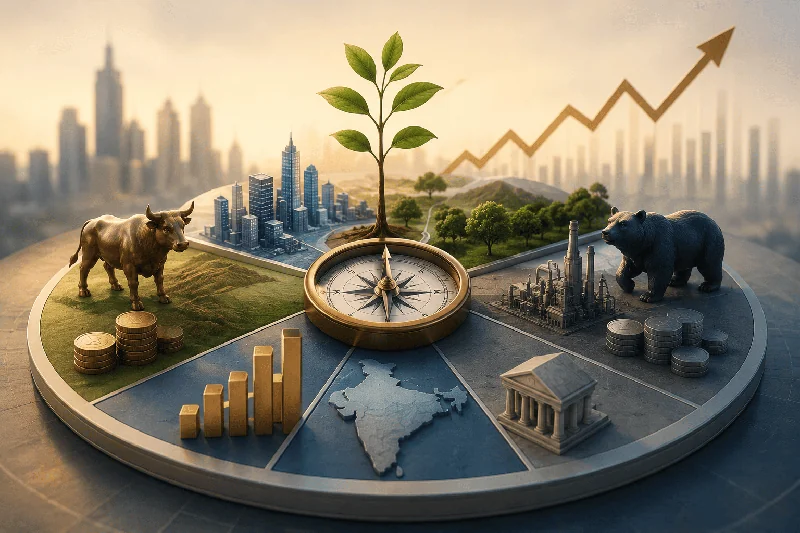
Source: GNews Economy
Arth Insight · What this means for your wallet
- You may see more job opportunities and potentially higher salaries, increasing your income.
- Your purchasing power could improve, allowing you to afford more goods and services.
- Your investments, especially in equity mutual funds or stocks, could generate better returns.
A recent report indicates that India's economic growth is projected to remain robust, sustaining above a 7% rate through the financial year 2026-27 (FY27). This forecast suggests continued strong performance for one of the world's fastest-growing major economies, offering a positive outlook for investors and citizens.
- ▸India's economy is projected to grow above 7% until the financial year 2026-27 (FY27), as per a recent report.
- ▸Sustained high growth typically boosts job creation, attracts investments, and increases consumer purchasing power.
- ▸This positive forecast can contribute to a favorable environment for businesses, the financial sector, and stock markets.
- ▸Individual financial planning should still be based on personal goals, despite a positive economic outlook.
- ✓India's economy is projected to grow above 7% until the financial year 2026-27 (FY27), as per a recent report.
- ✓Sustained high growth typically boosts job creation, attracts investments, and increases consumer purchasing power.
- ✓This positive forecast can contribute to a favorable environment for businesses, the financial sector, and stock markets.
- ✓Individual financial planning should still be based on personal goals, despite a positive economic outlook.
A recent economic assessment suggests that India is poised to maintain a robust economic growth trajectory, with its Gross Domestic Product (GDP) likely to expand at a rate exceeding 7% until the financial year 2026-27 (FY27). This projection, highlighted in a report, underscores the country's resilience and potential for sustained expansion.
While specific details regarding the origin or methodology of this particular report were not provided in the source material, the forecast itself is significant for India's economic outlook. Consistent growth above 7% places India among the top-performing economies globally and could have far-reaching implications for various sectors.
What sustained 7% growth could mean for India:
- Job Creation: A strong economy typically translates into increased business activity, leading to more employment opportunities across manufacturing, services, and construction sectors. This is crucial for India's large and young workforce.
- Investment Boost: Sustained high growth often attracts both domestic and foreign direct investment (FDI). Investors are keen on economies with predictable and robust expansion, which could lead to more capital inflow, infrastructure development, and technological advancements.
- Increased Incomes and Purchasing Power: Economic growth generally correlates with higher average incomes. For Indian retail readers, this could mean more disposable income, leading to increased consumption and improved living standards.
- Government Revenue: A growing economy broadens the tax base, potentially leading to higher government revenues. This additional fiscal space can be utilized for public spending on essential services like education, healthcare, and critical infrastructure projects.
For the financial sector, a buoyant economic outlook typically translates into higher credit demand, benefiting banks and Non-Banking Financial Companies (NBFCs). Strong corporate earnings driven by economic expansion can also provide tailwinds for the Indian stock markets, potentially yielding positive returns for equity investors.
The forecast comes at a time when global economic uncertainties persist. India's ability to potentially decouple from some of these global headwinds and maintain its domestic growth momentum would be a testament to its structural reforms and demographic advantages. However, achieving and sustaining this growth rate will depend on various factors, including continued policy stability, managing inflation, and addressing global economic shifts.
Indian retail investors and households should view such forecasts as an indicator of the broader economic environment. While positive growth projections create a conducive backdrop, individual financial decisions should always be based on thorough research, personal risk appetite, and professional financial advice.
This report is for informational purposes only and does not constitute financial or investment advice.
Some listings may be sponsored and Arth Vani may earn a referral fee. All information is for educational purposes only — verify terms and suitability with the provider before acting. Not financial advice.
Frequently Asked Questions
What is the key takeaway from the report?
The main takeaway is that India's economic growth is expected to remain above 7% through the financial year 2026-27 (FY27).
How might sustained 7% growth impact job opportunities?
Consistent high economic growth generally leads to increased business activity across various sectors, which in turn can create more job opportunities for the workforce.
What does FY27 refer to?
FY27 stands for Financial Year 2026-27, which typically runs from April 1, 2026, to March 31, 2027, in India.
Join the Arth Vani channels
Daily news summaries, IPO & market alerts on Telegram and WhatsApp.
Because you read about Business & Economy

Global Regulators Query Google Over Cloud Outage That Hit Bank Websites
European and UK financial regulators have contacted Google for explanations following a major cloud outage earlier this week. The incident disrupted operations for several bank websites, raising concerns about the stability of critical financial infrastructure. This move highlights increasing regulatory scrutiny on big tech firms providing essential services to the financial sector.
 Breaking
GST Reforms From Nov 1: Easier E-commerce Registration, Faster Refunds For Small Sellers
Starting November 1, the government will implement new GST reforms aimed at simplifying registration for small e-commerce sellers and expediting their refund processes. These measures include allowing warehouses as primary business places and introducing automated refunds, significantly reducing compliance burdens.

RBI Governor Warns of Growing Inflation Risks for India
The Reserve Bank of India (RBI) Governor has highlighted widening risks to the nation's inflation outlook. This signals a vigilant stance from the central bank on price stability, which is crucial for the financial well-being of Indian consumers.
Related Stories

Global Regulators Query Google Over Cloud Outage That Hit Bank Websites
European and UK financial regulators have contacted Google for explanations following a major cloud outage earlier this week. The incident disrupted operations for several bank websites, raising concerns about the stability of critical financial infrastructure. This move highlights increasing regulatory scrutiny on big tech firms providing essential services to the financial sector.
 Breaking
GST Reforms From Nov 1: Easier E-commerce Registration, Faster Refunds For Small Sellers
Starting November 1, the government will implement new GST reforms aimed at simplifying registration for small e-commerce sellers and expediting their refund processes. These measures include allowing warehouses as primary business places and introducing automated refunds, significantly reducing compliance burdens.

RBI Governor Warns of Growing Inflation Risks for India
The Reserve Bank of India (RBI) Governor has highlighted widening risks to the nation's inflation outlook. This signals a vigilant stance from the central bank on price stability, which is crucial for the financial well-being of Indian consumers.

Karnataka to Seek Centre's Advice on Restricting Children's Social Media Access
The Karnataka government plans to consult the central government regarding restrictions on social media access for children. This move comes as the Supreme Court has expressed reservations about broad bans and age-based limitations, highlighting the complex nature of digital regulation for minors.