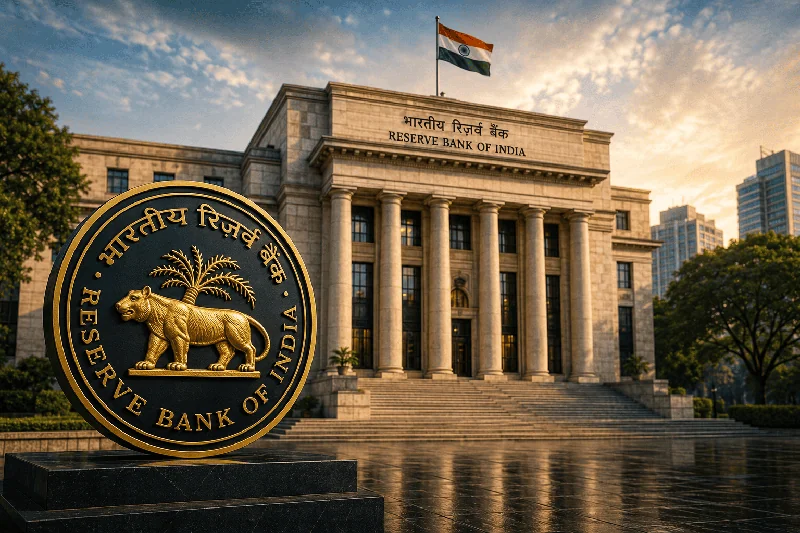
RBI Expects Minimal Cost from Record Dollar Inflows Amid High US Treasury Yields

Source: ET Economy
Arth Insight · What this means for your wallet
- Lower import costs: A stable Rupee means essentials like fuel and electronics might stay more affordable, saving you money.
- Predictable international expenses: Planning foreign travel or education abroad becomes more stable as the Rupee's value against the dollar holds steady.
- Government's financial health: Efficient RBI management could mean more funds for public services or less pressure for higher taxes in the future.
The Reserve Bank of India (RBI) anticipates low costs despite managing a significant influx of foreign currency, or 'dollar deluge'. This is primarily due to high interest rates on US government bonds, which are expected to offset potential hedging expenses. This scenario could also reduce the central bank's currency intervention costs and potentially impact future surplus transfers to the government.
- ▸The RBI anticipates minimal costs despite record foreign currency inflows into India.
- ▸High interest rates on US Treasury bonds are expected to offset potential hedging expenses.
- ▸Managing these inflows is also projected to reduce the RBI's currency intervention costs.
- ▸Efficient management of forex reserves impacts the RBI's balance sheet and its annual surplus transfer to the central government.
- ✓The RBI anticipates minimal costs despite record foreign currency inflows into India.
- ✓High interest rates on US Treasury bonds are expected to offset potential hedging expenses.
- ✓Managing these inflows is also projected to reduce the RBI's currency intervention costs.
- ✓Efficient management of forex reserves impacts the RBI's balance sheet and its annual surplus transfer to the central government.
The Reserve Bank of India (RBI) expects to incur minimal costs even as India experiences a record surge in foreign currency inflows. This optimistic outlook is largely attributed to the current high interest rates offered on US Treasury bonds, which are anticipated to help offset the expenses associated with managing these large dollar holdings.
Understanding the 'Dollar Deluge' and Associated Costs
A 'dollar deluge' refers to a period of exceptionally high foreign currency inflows into a country, often reflecting strong investor confidence in its economy. While these inflows are generally positive, signifying a robust economy and attractive investment landscape, they can present management challenges for the central bank.
The RBI is responsible for maintaining financial stability, which includes managing the exchange rate of the Indian Rupee. When large amounts of foreign currency flow in, the RBI often intervenes by buying these dollars to prevent excessive appreciation of the Rupee, which could harm exporters. Managing these foreign exchange reserves comes with costs, including potential expenses for hedging against currency fluctuations and the operational costs of holding and investing these reserves.
High US Treasury Yields Offer a Buffer
A key factor mitigating these potential costs for the RBI is the elevated interest rates on US Treasury securities. The central bank typically invests a portion of its foreign exchange reserves in safe, liquid assets like US government bonds. The higher yields on these treasuries mean that the RBI earns more income from its dollar holdings, effectively creating a financial cushion.
Economists have previously estimated that hedging costs associated with managing large forex reserves could reach as high as ₹36,000 crore. However, the RBI believes that the returns generated from its investments in high-yielding US treasuries will largely negate these potential hedging expenses. This allows the central bank to manage the inflows without significant financial strain.
Reduced Intervention Costs and Balance Sheet Impact
Another benefit highlighted by the central bank's assessment is the expected reduction in currency intervention costs. When there's a strong inflow of dollars, the RBI often has to intervene in the foreign exchange market to buy these dollars, preventing the rupee from appreciating too sharply. This intervention itself incurs costs. However, with record inflows, the overall costs related to such interventions are projected to decrease.
The management of these substantial foreign exchange reserves also has implications for the RBI's balance sheet growth. A growing balance sheet, particularly one that is efficiently managed with offsetting income streams, can influence the central bank's financial position. This, in turn, can impact the surplus funds that the RBI transfers to the Indian government annually. These transfers are a crucial source of non-tax revenue for the government, aiding its fiscal planning and expenditure.
In essence, the RBI's current strategy and the prevailing global interest rate environment are allowing it to navigate a period of significant dollar inflows with an expectation of minimal financial burden, thereby supporting broader economic stability.
This report is for informational purposes only and does not constitute financial advice.
Some listings may be sponsored and Arth Vani may earn a referral fee. All information is for educational purposes only — verify terms and suitability with the provider before acting. Not financial advice.
Frequently Asked Questions
Why can large dollar inflows be costly for the RBI?
Large dollar inflows can be costly because the RBI often has to buy these dollars to stabilize the rupee, and managing these large foreign exchange reserves can involve expenses like hedging against currency fluctuations and operational costs for holding and investing the reserves.
How do high US Treasury rates help the RBI manage these costs?
The RBI invests a portion of its foreign exchange reserves in US Treasury bonds. High interest rates on these bonds mean the RBI earns more income from these investments, which helps to offset the costs associated with managing the dollar inflows, such as hedging expenses.
What is the significance of the RBI's surplus transfer to the government?
The RBI annually transfers its surplus profits to the central government, which is a significant source of non-tax revenue. Efficient management of foreign exchange reserves, leading to lower costs and stable earnings, can positively influence the size of this surplus transfer, aiding government finances.
Join the Arth Vani channels
Daily news summaries, IPO & market alerts on Telegram and WhatsApp.
Because you read about Business & Economy
 Breaking
Global Investors Object to Indian Tax Rule Use on 'Grandfathered Shares'
International investors have voiced strong concerns to the Central Board of Direct Taxes (CBDT) regarding the Indian Income-tax authorities' use of the judicial anti-avoidance rule (JAAR). They argue that invoking JAAR to deny tax relief on 'grandfathered shares' contradicts earlier regulations issued by the CBDT, creating uncertainty for foreign investment.

Indian Govt Eyes Scope 3 Emissions Monitoring for Exporters Amid Global Green Push
The Indian government is discussing a new policy that could require exporters to track their indirect, 'Scope 3' emissions. This move comes as global trade partners are imposing stricter environmental standards, aiming to ensure Indian businesses remain competitive internationally. If implemented, this could significantly increase compliance burdens, particularly for Micro, Small, and Medium Enterprises (MSMEs).

Poultry Farmers Face 15% Loss as Livestock Feed Costs Surge by 75%
Indian poultry farmers are currently experiencing financial losses of approximately 15% due to a sharp increase in livestock feed costs. Key ingredients for feed have seen price hikes of up to 75%, significantly impacting farmers' profitability and operational sustainability.
Related Stories
 Breaking
Global Investors Object to Indian Tax Rule Use on 'Grandfathered Shares'
International investors have voiced strong concerns to the Central Board of Direct Taxes (CBDT) regarding the Indian Income-tax authorities' use of the judicial anti-avoidance rule (JAAR). They argue that invoking JAAR to deny tax relief on 'grandfathered shares' contradicts earlier regulations issued by the CBDT, creating uncertainty for foreign investment.

Indian Govt Eyes Scope 3 Emissions Monitoring for Exporters Amid Global Green Push
The Indian government is discussing a new policy that could require exporters to track their indirect, 'Scope 3' emissions. This move comes as global trade partners are imposing stricter environmental standards, aiming to ensure Indian businesses remain competitive internationally. If implemented, this could significantly increase compliance burdens, particularly for Micro, Small, and Medium Enterprises (MSMEs).

Poultry Farmers Face 15% Loss as Livestock Feed Costs Surge by 75%
Indian poultry farmers are currently experiencing financial losses of approximately 15% due to a sharp increase in livestock feed costs. Key ingredients for feed have seen price hikes of up to 75%, significantly impacting farmers' profitability and operational sustainability.

India's Exports Show Resilience: West Asia Recovers, Africa & ASEAN Surge
Indian exports to West Asia are bouncing back from disruptions caused by the US-Iran conflict. Shipments to key regions like Africa, ASEAN, and North-East Asia also recorded strong growth during April-August.