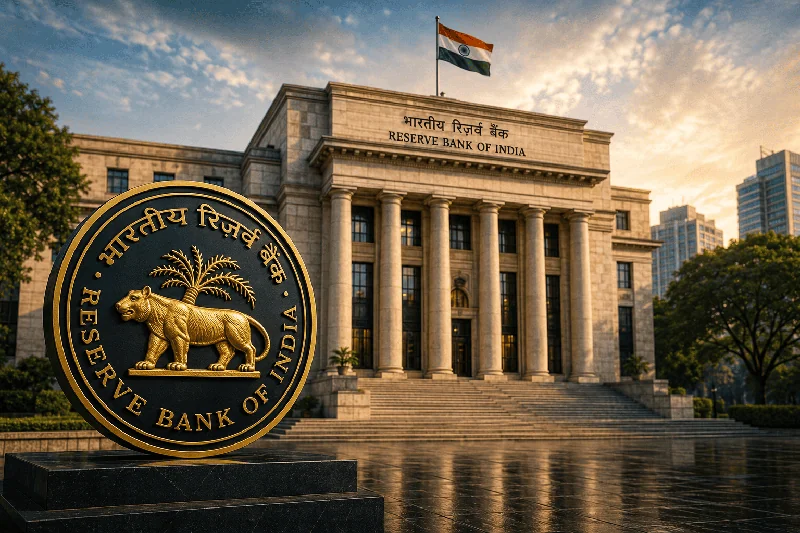
RBI to Inject ₹1 Lakh Crore into Banking System to Ensure Financial Stability

Source: Economictimes
Arth Insight · What this means for your wallet
- The RBI is injecting ₹1 lakh crore into the banking system to prevent a cash shortage.
- The 3-day VRR auction on June 19 aims to keep short-term interest rates from spiking.
- This move ensures banks have enough money for daily operations and lending.
The Reserve Bank of India will hold a special ₹1 lakh crore auction on June 19 to provide banks with short-term cash. This move is aimed at keeping interest rates stable and ensuring that banks have enough liquidity for daily operations.
- ▸The RBI is injecting ₹1 lakh crore into the banking system to prevent a cash shortage.
- ▸The 3-day VRR auction on June 19 aims to keep short-term interest rates from spiking.
- ▸This move ensures banks have enough money for daily operations and lending.
- ▸Retail customers benefit from a more stable and predictable banking environment.
- ✓The RBI is injecting ₹1 lakh crore into the banking system to prevent a cash shortage.
- ✓The 3-day VRR auction on June 19 aims to keep short-term interest rates from spiking.
- ✓This move ensures banks have enough money for daily operations and lending.
- ✓Retail customers benefit from a more stable and predictable banking environment.
The Reserve Bank of India (RBI) has announced a significant measure to maintain the health of the nation’s financial system. On June 19, the central bank will conduct a Variable Rate Repo (VRR) auction worth ₹1 lakh crore. This three-day facility is designed to pump much-needed cash into the banking sector, ensuring that the wheels of the economy continue to turn without friction.
Addressing the Cash Crunch
In simple terms, liquidity refers to the amount of cash available within the banking system for daily transactions. Sometimes, the supply of this cash can tighten due to various seasonal factors, such as corporate tax payments or a slowdown in government spending. When cash becomes scarce, the interest rates that banks charge each other for very short-term loans tend to rise sharply. The RBI’s decision to offer ₹1 lakh crore is a proactive step to prevent such spikes and keep the market stable.
How the Auction Works
A Variable Rate Repo (VRR) auction is a tool used by the RBI to manage the money supply. In this process, the central bank lends money to commercial banks for a short duration—in this case, three days. Banks participate by bidding for these funds. By injecting this massive sum, the RBI ensures that banks have sufficient funds to meet their withdrawal demands and lending requirements without having to scramble for cash at high costs.
- Liquidity Support: The ₹1 lakh crore injection helps banks manage their immediate cash needs.
- Rate Stability: By providing ample funds, the RBI prevents overnight interest rates from becoming volatile.
- Operational Smoothness: This ensures that retail banking services and inter-bank transactions proceed without any hiccups.
Impact on Retail Customers
While these auctions take place in the 'wholesale' money market, their impact eventually reaches the common man. A stable banking system with adequate cash means that banks are in a better position to manage their loan portfolios and deposit rates. If the RBI were to allow a cash shortage to persist, it could lead to higher costs for banks, which might eventually be passed on to borrowers in the form of higher interest rates. By intervening now, the RBI is essentially providing a safety net for the broader economy.
Ongoing Monitoring
This move follows a series of recent liquidity infusions by the central bank, suggesting that the RBI is keeping a close watch on the pulse of the financial markets. As the 'lender of last resort,' the RBI’s active management of funds ensures that even when temporary shortages occur, the overall financial environment remains predictable and secure for Indian savers and investors.
This information is for educational and news purposes only and does not constitute financial or investment advice; readers should consult a qualified professional for specific financial guidance.
Some listings may be sponsored and Arth Vani may earn a referral fee. All information is for educational purposes only — verify terms and suitability with the provider before acting. Not financial advice.
Frequently Asked Questions
What is a VRR auction in simple terms?
It is a short-term loan provided by the RBI to commercial banks. Banks bid for this money to ensure they have enough cash to handle daily transactions and meet regulatory requirements.
Why is the RBI pumping ₹1 lakh crore into banks now?
The RBI does this when it senses that the banking system is running low on ready cash. This prevents short-term interest rates from rising too quickly, which helps keep the overall economy stable.
How does this RBI move affect my personal bank account?
While it doesn't change your balance, it ensures your bank remains liquid and healthy. It also helps prevent sudden changes in interest rates that could eventually affect your loans or fixed deposits.
Join the Arth Vani channels
Daily news summaries, IPO & market alerts on Telegram and WhatsApp.
Because you read about Business & Economy

India's External Debt Reaches $778.2 Billion by June End
India's total external debt, comprising loans and other obligations to non-residents, rose to $778.2 billion by the end of the June quarter. This figure indicates a continued increase in the nation's financial liabilities with foreign entities.
 Breaking
BofA Securities Forecasts 100 BPS RBI Repo Rate Hike by H1 2027
BofA Securities has projected that the Reserve Bank of India (RBI) may increase the key repo rate by a total of 100 basis points (1%) through the first half of 2027. This forecast suggests potential changes in borrowing costs for banks, which could subsequently influence interest rates for various loans and savings products for Indian consumers.
 Breaking
India Targets 177.72 Million Tonnes Rabi Foodgrain, Overall Goal Cut Amid El Nino
Union Agriculture Minister Shivraj Singh Chouhan announced a target of 177.72 million tonnes (mt) for foodgrain production in the upcoming Rabi season. This target was set at the National Agriculture Conference-Rabi Campaign 2026, where it was also revealed that India's overall foodgrain production goal has been lowered due to anticipated El Nino impacts.
Related Stories

India's External Debt Reaches $778.2 Billion by June End
India's total external debt, comprising loans and other obligations to non-residents, rose to $778.2 billion by the end of the June quarter. This figure indicates a continued increase in the nation's financial liabilities with foreign entities.
 Breaking
BofA Securities Forecasts 100 BPS RBI Repo Rate Hike by H1 2027
BofA Securities has projected that the Reserve Bank of India (RBI) may increase the key repo rate by a total of 100 basis points (1%) through the first half of 2027. This forecast suggests potential changes in borrowing costs for banks, which could subsequently influence interest rates for various loans and savings products for Indian consumers.
 Breaking
India Targets 177.72 Million Tonnes Rabi Foodgrain, Overall Goal Cut Amid El Nino
Union Agriculture Minister Shivraj Singh Chouhan announced a target of 177.72 million tonnes (mt) for foodgrain production in the upcoming Rabi season. This target was set at the National Agriculture Conference-Rabi Campaign 2026, where it was also revealed that India's overall foodgrain production goal has been lowered due to anticipated El Nino impacts.
 Breaking
Centre Plans IT Rule Amendments to Bar Under-18s from Social Media, Informs SC
The Centre has reportedly informed the Supreme Court (SC) of its intention to amend the IT Rules, a move aimed at preventing individuals under the age of 18 from accessing social media platforms. This significant regulatory change seeks to enhance online safety and protection for minors across India. Further details on the specific amendments and their implementation are anticipated.