
Source: GNews NBFC
Arth Insight · What this means for your wallet
- You might not see significantly lower interest rates on new loans or refinancing opportunities, as banks will be less aggressive.
- Banks might become stricter with loan approvals and terms, potentially requiring a better credit history.
- Your deposits and savings in banks will be more secure as the RBI aims to prevent banks from taking excessive risks.
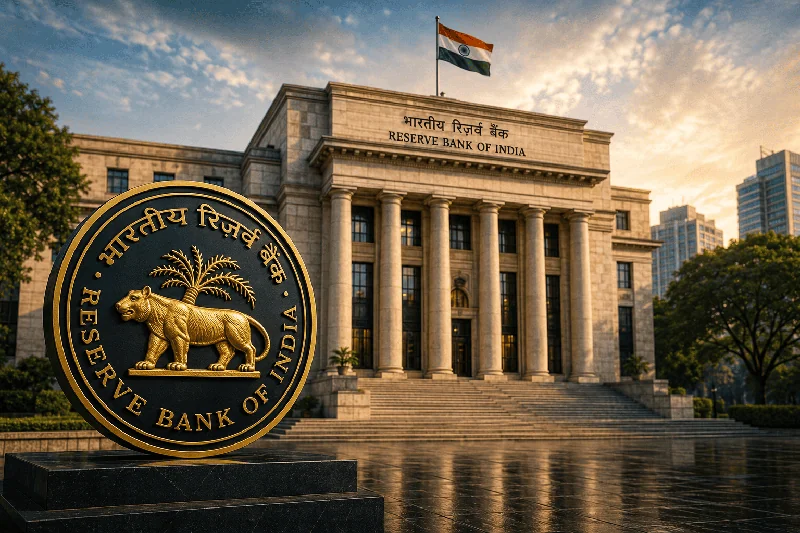
India's central bank, the Reserve Bank of India (RBI), has cautioned commercial banks against engaging in an aggressive loan price war. This warning signals the RBI's concern over potential risks to the financial system's stability and asset quality that could arise from excessive competition in lending.
- ▸The RBI has cautioned banks against aggressive competition that could lead to a 'loan price war'.
- ▸This indicates the central bank's focus on maintaining financial stability and preventing a decline in asset quality.
- ▸Borrowers may still see competitive loan offers, but possibly without an uncontrolled drop in interest rates.
- ✓The RBI has cautioned banks against aggressive competition that could lead to a 'loan price war'.
- ✓This indicates the central bank's focus on maintaining financial stability and preventing a decline in asset quality.
- ✓Borrowers may still see competitive loan offers, but possibly without an uncontrolled drop in interest rates.
The Reserve Bank of India (RBI) has issued a caution to banks regarding an escalating 'loan price war'. This advisory highlights the central bank's focus on maintaining financial stability and ensuring prudent lending practices across the Indian banking sector.
A loan price war typically occurs when banks aggressively cut interest rates and ease lending terms to gain market share. While this might initially seem beneficial for borrowers, the RBI's warning suggests concerns about the potential long-term consequences for the banking system.
Why the RBI is Concerned
The RBI's primary mandate includes ensuring the stability and health of the financial system. An unchecked loan price war can lead to several risks:
- Reduced Profitability: Aggressively low interest rates can squeeze banks' net interest margins, impacting their overall profitability and ability to absorb shocks.
- Asset Quality Concerns: In the pursuit of higher loan growth, banks might inadvertently relax their credit assessment standards, leading to a rise in Non-Performing Assets (NPAs) or bad loans in the future.
- Systemic Risk: If multiple banks face profitability issues or a surge in bad loans due to unsustainable lending practices, it could pose a broader risk to the stability of the financial system.
The central bank's intervention underscores its role in guiding banks to strike a balance between healthy competition and responsible lending. While competition is encouraged to benefit consumers, the RBI aims to prevent scenarios where such competition compromises the robustness of individual banks or the system as a whole.
Impact on Borrowers and Banks
For borrowers, this guidance from the RBI could mean that while competitive loan rates will still be available, there might not be an unrestrained race to the bottom in terms of interest rates. Banks are expected to continue offering competitive products but with an increased emphasis on assessing risk and ensuring sustainable growth.
For banks, the warning reinforces the need for robust risk management frameworks and a careful approach to portfolio growth. They will likely be encouraged to focus on qualitative aspects of lending, such as customer service and product innovation, alongside competitive pricing.
The RBI's proactive stance is a reminder to the banking sector that while market dynamics drive competition, adherence to prudential norms and long-term financial health remain paramount.
This report is for informational purposes only and does not constitute financial or investment advice.
Loan interest rates, processing fees and eligibility are set by the lender and subject to credit approval — verify current terms before applying. Some listings may be sponsored. Not financial advice.
Frequently Asked Questions
What does a 'loan price war' mean?
A loan price war happens when banks aggressively lower interest rates and ease lending terms to attract more borrowers, often at the expense of their profit margins.
Why is the RBI concerned about a loan price war?
The RBI is concerned because intense price competition can lead to reduced profitability for banks and potentially higher risks of bad loans if credit assessment standards are lowered, threatening the stability of the financial system.
How might this impact me as a borrower?
While banks will continue to compete for your business, the RBI's warning suggests that interest rates on loans might not fall as sharply or rapidly as they might otherwise, as banks will likely be more cautious in their pricing strategies.
Join the Arth Vani channels
Daily news summaries, IPO & market alerts on Telegram and WhatsApp.
Because you read about NBFCs
 IPOBreaking
Moneyview IPO to Open on September 24: Price Band Set at ₹32-34 Per Share
Fintech unicorn Moneyview has announced its initial public offering (IPO) details, setting a price band of ₹32 to ₹34 per share. The issue is scheduled to open for public subscription on September 24, marking a significant milestone for the digital lending platform.
 IPOBreaking
Moneyview Trims IPO Valuation Target to $624 Million; Accel-Backed Fintech Files Papers
Bengaluru-based fintech startup Moneyview has filed for an Initial Public Offering (IPO) seeking a valuation of approximately $624 million (₹5,200 crore). The company has significantly scaled down its valuation expectations compared to earlier internal estimates as it prepares to list on Indian exchanges.
 New LaunchBreaking
Capri Loans Launches 'Vyapar Mahotsav' Gold Loan Offer
Capri Loans has introduced a new 'Vyapar Mahotsav' gold loan offer, aiming to provide financial assistance to small and medium-sized businesses. This initiative is designed to help entrepreneurs access quick and easy funding against their gold assets.
Related Stories
 IPOBreaking
Moneyview IPO to Open on September 24: Price Band Set at ₹32-34 Per Share
Fintech unicorn Moneyview has announced its initial public offering (IPO) details, setting a price band of ₹32 to ₹34 per share. The issue is scheduled to open for public subscription on September 24, marking a significant milestone for the digital lending platform.
 IPOBreaking
Moneyview Trims IPO Valuation Target to $624 Million; Accel-Backed Fintech Files Papers
Bengaluru-based fintech startup Moneyview has filed for an Initial Public Offering (IPO) seeking a valuation of approximately $624 million (₹5,200 crore). The company has significantly scaled down its valuation expectations compared to earlier internal estimates as it prepares to list on Indian exchanges.
 New LaunchBreaking
Capri Loans Launches 'Vyapar Mahotsav' Gold Loan Offer
Capri Loans has introduced a new 'Vyapar Mahotsav' gold loan offer, aiming to provide financial assistance to small and medium-sized businesses. This initiative is designed to help entrepreneurs access quick and easy funding against their gold assets.
 Breaking
SC Orders RBI to Enforce Strict Vehicle Loan Repossession Rules; NBFC CIFCL Fined
India's Supreme Court has directed the Reserve Bank of India (RBI) to strictly enforce guidelines on vehicle loan repossessions, emphasizing the need for fair and transparent procedures. This directive comes after CIFCL, an NBFC, faced a penalty for non-compliance, signaling enhanced scrutiny on lenders.